

Curiosity | Conversation | Connection

Reusable Silicone Placemats
Birdy Mats are reusable silicone coloring mats that foster early math skills and numeracy, creativity, life skills, and connection at home, at school, and on the go.
Birdy Mats - Fostering Early Math Skills & Numeracy, Creativity and Connection
-
Whiteboard Mat - A blank canvas for bright ideas
Regular price $19.99 USDRegular priceUnit price perWhiteboard Mat - A blank canvas for bright ideas
Regular price $19.99 USDRegular priceUnit price perWhiteboard Mat - A blank canvas for bright ideas
Regular price $19.99 USDRegular priceUnit price per -
Birdy Learning Digital Gift Card
Regular price From $10.00 USDRegular priceUnit price perBirdy Learning Digital Gift Card
Regular price From $10.00 USDRegular priceUnit price perBirdy Learning Digital Gift Card
Regular price From $10.00 USDRegular priceUnit price per -
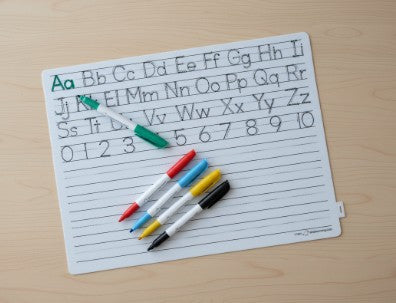
ABC 123 Learning Mat
Regular price $20.00 USDRegular priceUnit price per




-
Birdy Mats
Durable silicone mats designed foster early math and reading, creativity, collaboration and problems solving at home and on the go.
-
Printable Home Labels
Print, cut and display home labels in English, Spanish or French! Great for building early vocabulary in each language!
-
Printable Fancy Frames
Printable fancy frames that turn your child's work or writing into a masterpiece!
-
Classes
Coming soon!
Printables
-
Birdy Learning Digital Gift Card
Regular price From $10.00 USDRegular priceUnit price perBirdy Learning Digital Gift Card
Regular price From $10.00 USDRegular priceUnit price perBirdy Learning Digital Gift Card
Regular price From $10.00 USDRegular priceUnit price per -
Home Vocabulary Labels (English)
Regular price $3.00 USDRegular priceUnit price per -
Spanish Home Vocabulary Labels
Regular price $3.00 USDRegular priceUnit price per -
French Home Vocabulary Labels
Regular price $2.00 USDRegular priceUnit price per


What the Research Says...
-
Build Strong Math Foundations
Standards for Mathematical Practice
“Thinking habits” we want kids to build in math. They focus less on getting the right answer and more on how children approach, explore, and explain problems.
Make sense of problems and persevere in solving them (SMP 1): Kids work to understand what the problem is asking, make a plan, and keep trying—even when it feels challenging.
Reason abstractly and quantitatively (SMP 2): Kids connect the math (numbers and symbols) to real meaning—what the numbers stand for in the situation.
Construct viable arguments and critique the reasoning of others (SMP 3): Kids can explain why their answer makes sense and listen carefully to decide if someone else’s thinking is correct.
Model with mathematics (SMP 4): Kids use math to describe and solve real-life situations—using pictures, tables, graphs, or equations—and check if the answer is reasonable.
Use appropriate tools strategically (SMP 5): Kids choose helpful tools (like drawings, manipulatives, rulers, or calculators) and use them in smart ways to solve problems.
Attend to precision (SMP 6): Kids calculate carefully and communicate clearly, including using correct labels, units, and math words.
Look for and make use of structure (SMP 7): Kids notice patterns and “how math is organized” (like place value or properties) to solve problems more efficiently.
Look for and express regularity in repeated reasoning (SMP 8): Kids notice when steps repeat, use those patterns to make a shortcut or rule, and check that it still works.
-
What is Numeracy?
Read now
Early numeracy is a young child’s developing understanding of numbers and quantity, like counting with meaning, recognizing small amounts without counting, comparing more/less, and seeing how numbers can be made and broken apart (for example, 5 as 2 and 3). It matters because these skills form the foundation for later math learning and problem-solving, strongly predict future academic success, build everyday life skills (like estimating, sharing, and measuring), and can be developed naturally through play and daily routines rather than worksheets. -
Why do early mathematics skills predict later mathematics and reading achievement? The role of executive function
Read nowA robust association between young children’s early mathematical
proficiency and later academic achievement is well established.
Less is known about the mechanisms through which early mathematics skills may contribute to later mathematics and especially reading achievement